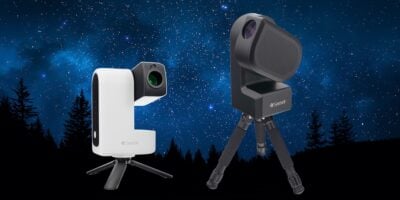
January 10 – Jupiter at Opposition
January opens the year with a spectacular treat as Jupiter reaches opposition, meaning Earth sits directly between the giant planet and the Sun. Jupiter will rise at sunset, shine all night long, and appear brighter and larger than at any other time of year. Even with the naked eye, it dominates the winter sky, while binoculars reveal its four largest moons lined up like tiny jewels. A telescope transforms the view entirely, showing cloud bands and swirling storms on the largest planet in our Solar System. Observe Jupiter at your nearest observatory or stargazing event.
 Alston Observatory near Preston hosts monthly open evenings
February 26 – A Triple Planet Conjunction: Saturn, Venus, and Mercury
Late February brings an elegant planetary gathering as Saturn, Venus, and Mercury appear close together low on the western horizon just after sunset. Venus will blaze brightest, with Saturn’s golden glow and elusive Mercury tucked nearby. The trio will be visible for only a short time before sinking below the horizon, making this a rewarding challenge for patient skywatchers who find a clear, unobstructed view westward. Try using binoculars however make sure the Sun has set first.
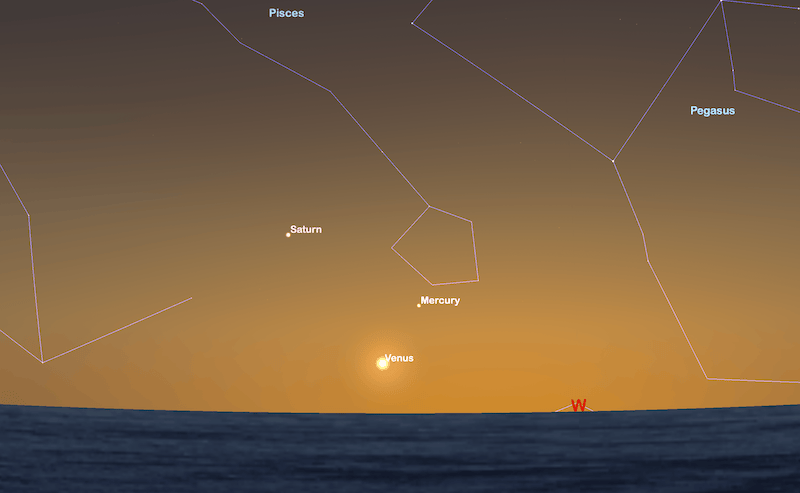 Look low towards the West for a spectacular view
March 20 – Spring Equinox and a Prime Time for Auroras
The March equinox marks the official start of spring in the Northern Hemisphere, but it also signals one of the best periods of the year for spotting the Northern Lights. Thanks to the Russell–McPherron effect, Earth’s magnetic field is especially receptive to solar activity around the equinoxes. If solar storms erupt, shimmering curtains of green, red, and purple light may dance across northern skies, rewarding those who venture out after dark. Maximise your chances of seeing the Northern Lights with expert aurora chasers from Go Stargazing on board Fred Olsen Northern Lights cruises.
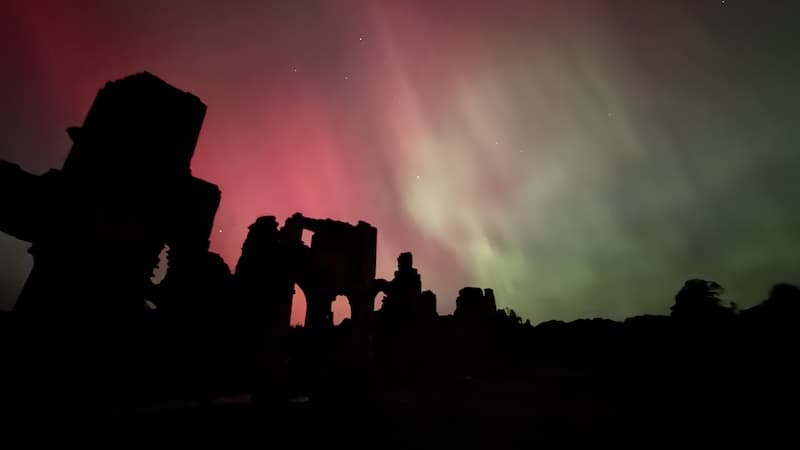 Aurora photographed over Easby Abbey near Richmond
April 22 – Lyrids Meteor Shower Peaks Under Dark Skies
The Lyrids meteor shower peaks on April 22, and with a New Moon providing dark skies, conditions could be excellent. This reliable annual shower produces up to 20 meteors per hour, many of them fast and bright, occasionally leaving glowing trails behind them. No telescope is needed—just wrap up warm, lie back, and let your eyes adjust as streaks of ancient comet dust burn up high above. Find your nearest dark sky site or accompany Go Stargazing astronomers on this Egyptian stargazing and meteor shower tour.
May 1 and May 31 – A Month of Two Full Moons
May offers skywatchers a rare photographic opportunity with two full Moons in a single month. Each full Moon rises dramatically at sunset, appearing larger and more golden near the horizon. This is the perfect time to experiment with Moon photography, especially by framing it against landmarks, trees, or buildings to create striking foregrounds that highlight our nearest celestial neighbour. See if there’s an astrophotography event or course near you.
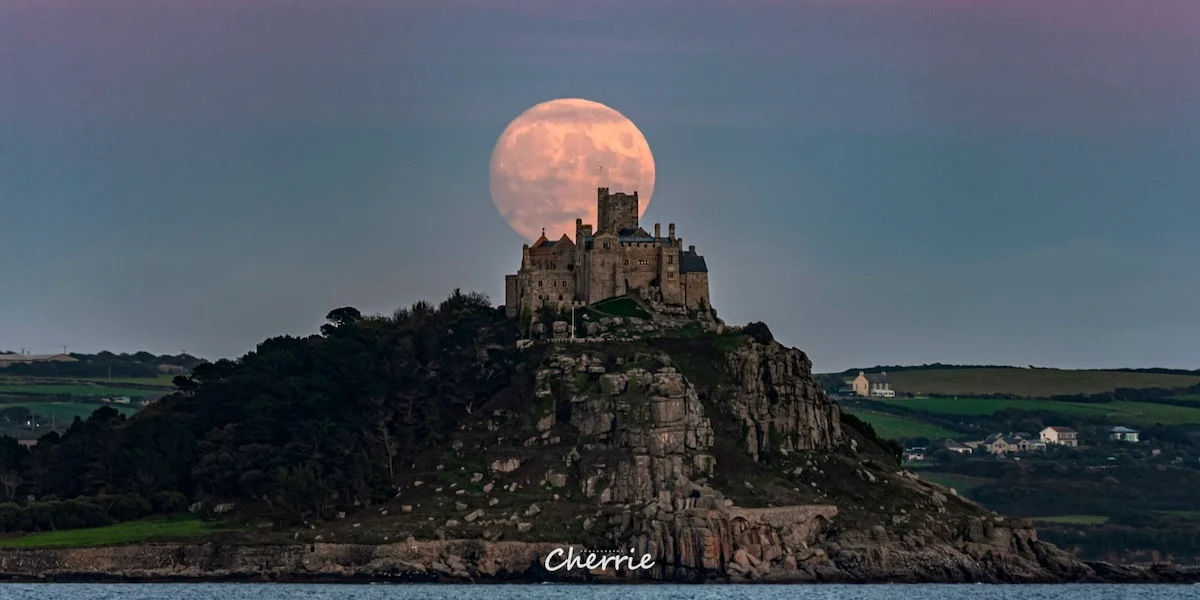 Cherrie Photography runs Moon astrophotography workshops in South West England
June 9 – Venus and Jupiter Meet in Twilight
In early June, the two brightest planets in the night sky come together in a stunning conjunction. Venus and Jupiter will shine side by side in the evening twilight, creating an unmistakable pairing that draws the eye even before the stars emerge. These planetary encounters are among the most accessible astronomical events, visible from cities and countryside alike, and perfect for introducing newcomers to the joy of skywatching.
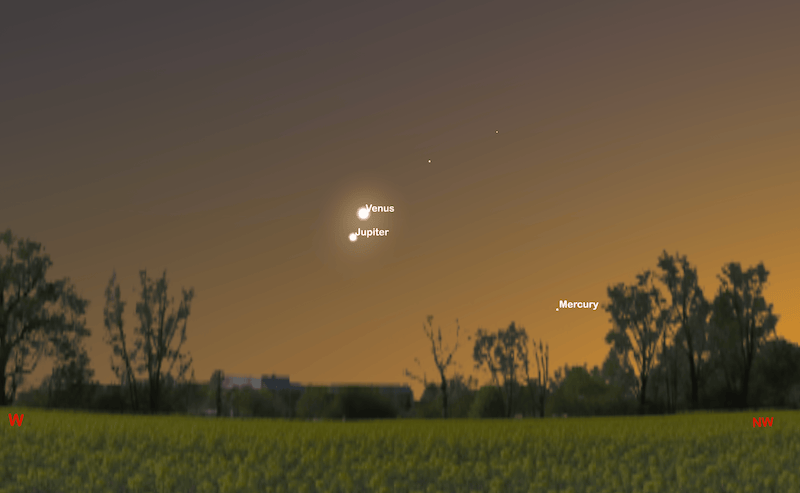 See Venus and Jupiter get close, with Mercury more tricky to spot
July 11 – Crescent Moon, Mars, and the Pleiades
The early hours of July 11 reward night owls with a truly beautiful scene as a delicate crescent Moon passes near Mars and the Pleiades star cluster. Low in the northeast before dawn, this grouping forms a graceful celestial tableau that feels almost painterly. Binoculars enhance the view, revealing the misty glow of the Pleiades and the soft earthshine illuminating the Moon’s darkened side.
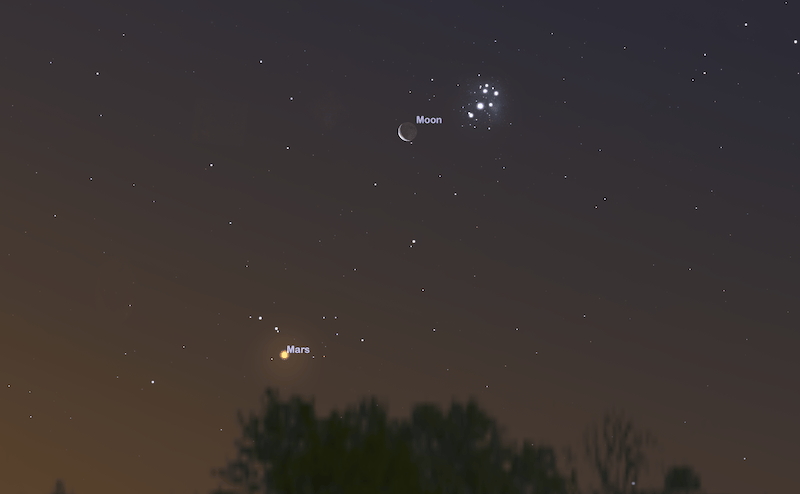 Amazing views towards the East just before sunrise
August 12 – A Total Solar Eclipse and the Perseids Peak
August 12 is the undisputed highlight of the astronomical year, delivering both a total solar eclipse and the peak of the Perseids meteor shower. For those positioned along the eclipse path, day will briefly turn to night as the Sun’s corona blazes into view—an experience many describe as life-changing. After dark, the Perseids take over, sending dozens of bright meteors streaking across warm summer skies. This is a date worth planning around well in advance, perhaps you might join Go Stargazing astronomer’s on a Fred Olsen Solar Eclipse Cruise, or with Wil Photography and Ambassador?
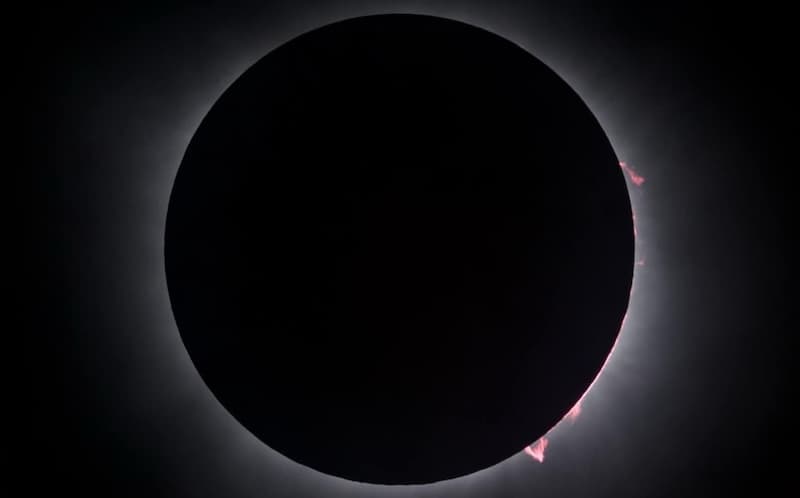 A total solar eclipse, photographed by Dr Luke Tyas in Texas, 2023.
September 25 – The Triplets of Gemini
On September 25, Mars joins the twin stars of Gemini, Pollux and Castor, forming a striking trio in the night sky. The reddish hue of Mars contrasts beautifully with the cooler white tones of the stars, creating a neat geometric alignment that’s easy to spot. This is a wonderful example of how planets wander through the constellations, temporarily reshaping familiar patterns overhead.
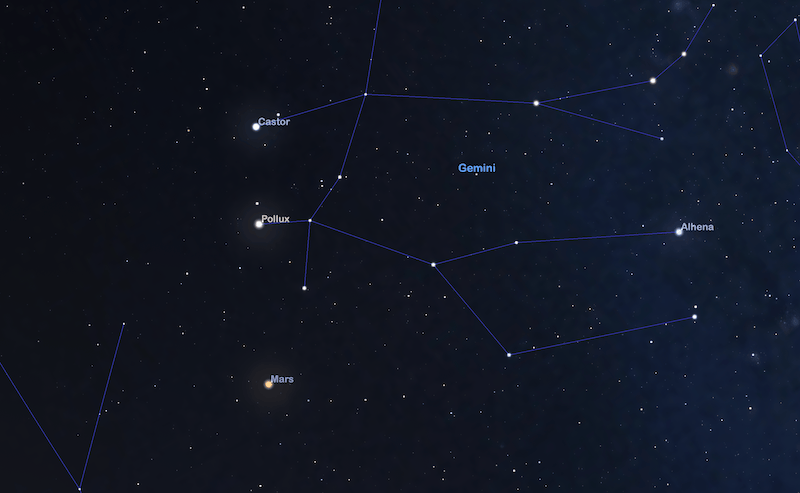 Mars aligns with the two bright stars of Gemini
October 4 – Saturn at Opposition
October brings Saturn to opposition, making it the best time of year to observe the ringed planet. Saturn will rise at sunset and remain visible all night, glowing steadily among the stars. Through a telescope, its rings are unmistakable and awe-inspiring, often prompting gasps from first-time viewers. Even modest equipment reveals moons and subtle details that make Saturn a perennial favourite.
November 16 – Mars and Jupiter Draw Close Near Leo
Mid-November features a close encounter between Mars and Jupiter near the sickle-shaped stars of Leo. Jupiter’s brilliance and Mars’ fiery tint create a dramatic pairing that dominates the late-night sky. This planetary dance is easy to follow over several nights as their relative positions subtly change, reminding us that the Solar System is constantly in motion.
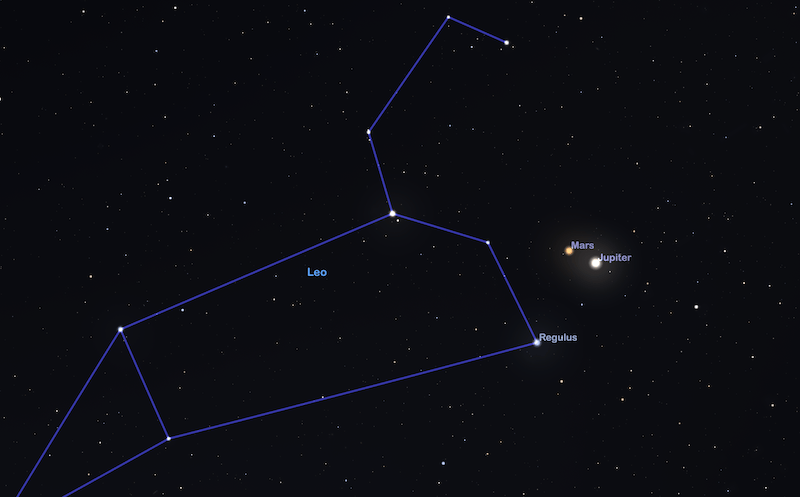 Mars and Jupiter close in on Regulus in Leo
December 13 – Geminids Meteor Shower Closes the Year in Style
The year ends on a high note with the peak of the Geminids meteor shower on December 13. With the crescent Moon setting early, skies will be dark and ideal for viewing one of the most prolific meteor showers of all. The Geminids are known for their bright, colourful streaks and frequent fireballs, offering a thrilling finale to a year filled with reasons to step outside, look up, and reconnect with the night sky. Make a stargazing break of it and stay at one of our recommended stargazing accommodation providers.
 Stay at a Shacks remote cabin, perfect for stargazing!
Wishing you clear skies for 2026!
We hope you find happiness and joy in the night skies throughout 2026. For more cool things to look out for, follow us on Facebook and Instagram. Register on our website to receive email updates and download our free mobile app to easily find stargazing events and locations.
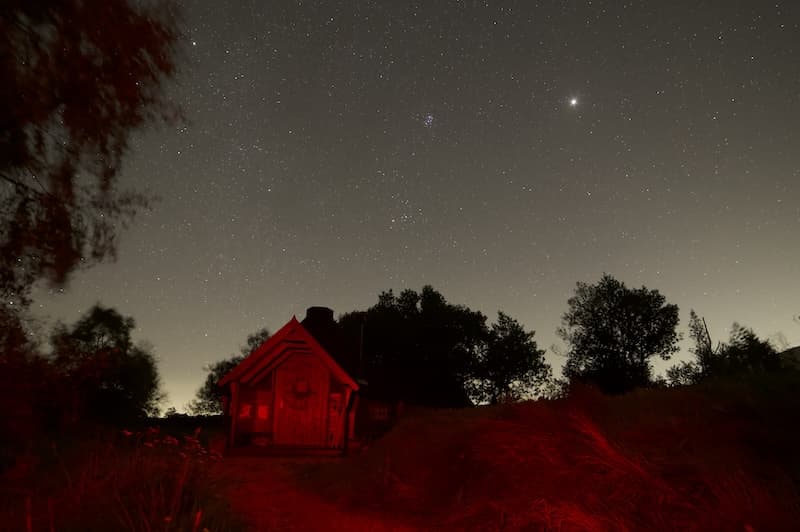 A cabin under the stars at Little Seed Field in Nidderdale