November brings some wonderful opportunities for stargazing, with longer nights, bright planets, shooting stars and some of the most recognisable constellations returning to our skies. Whether you’re observing from your back garden or heading somewhere with darker skies, there’s plenty to look forward to this month. Here are some of our highlights!
Catch the Leonid meteor shower
The Leonid meteor shower reaches its peak overnight on 17–18 November, offering the chance to spot fast-moving shooting stars streaking across the night sky. The Leonids are caused by tiny particles of debris left behind by Comet 55P/Tempel-Tuttle. Under ideal conditions, observers might see around 10 to 15 meteors per hour, although actual numbers will depend on the weather and light pollution. The best time to watch will be after midnight and into the early hours, when the Moon has set and the skies are darker. You won’t need a telescope or binoculars, just somewhere comfortable with a good view of the sky.
Venus dazzles in the morning sky
Early risers are in for a treat this November as Venus shines brilliantly in the eastern sky before sunrise. Often called the Morning Star, Venus is the brightest planet visible from Earth and is particularly impressive this month. It reaches its greatest brightness on 27 November, making it difficult to miss if you have a clear view towards the east. Look out for Venus low above the horizon as dawn approaches. It’s a wonderful sight, even from towns and cities where light pollution makes fainter stars difficult to see.
Mars and Jupiter meet before dawn
Another highlight occurs on the morning of 16 November, when Mars and Jupiter appear remarkably close together in the constellation Leo. The two planets will be separated by just over one degree in the sky, making them an attractive pairing for naked-eye observers and a great target for binoculars. Look towards the eastern sky before sunrise to find brilliant Jupiter alongside the distinctly reddish Mars.
Look out for the Taurid fireballs
November also brings the Taurid meteor showers, with the Northern Taurids peaking around 12 November. Although the Taurids generally produce fewer meteors than the Leonids, they’re particularly well known for occasionally producing spectacularly bright fireballs. With the New Moon falling on 9 November, the first half of the month offers some excellent opportunities to enjoy darker skies.
Saturn and the return of Orion
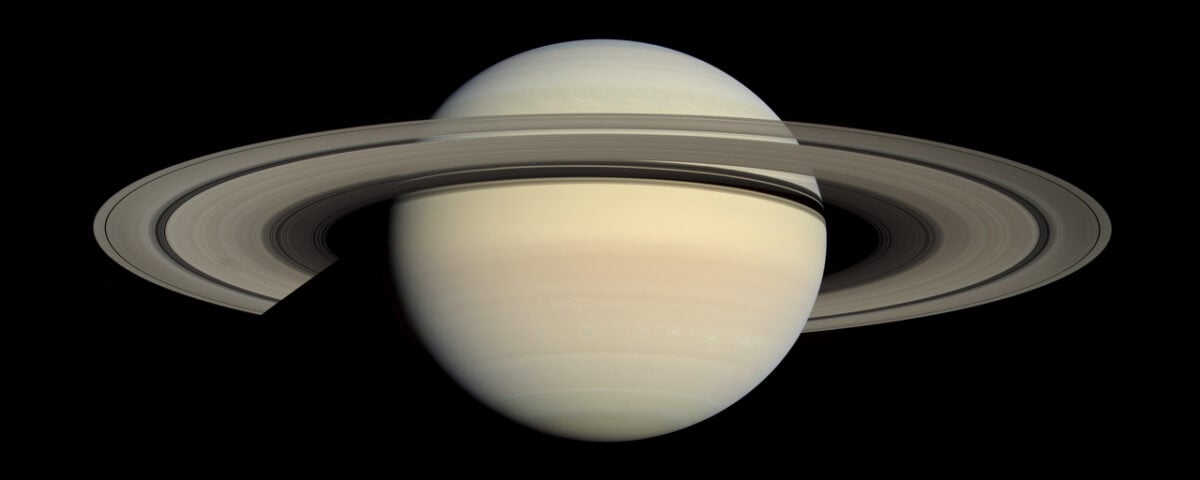
Saturn remains a lovely sight in the evening sky throughout November. Look towards the southern sky after darkness falls to find the planet, which appears as a steady, yellowish point of light. A small telescope will reveal its famous rings. Meanwhile, the unmistakable constellation of Orion is returning to our evening skies. Look towards the east later in the evening to find its distinctive three-star belt and the bright stars Betelgeuse and Rigel. Below Orion’s Belt lies the magnificent Orion Nebula, a vast cloud of gas and dust where new stars are forming. It’s a fantastic target for binoculars or a small telescope.
Discover the Pleiades and Andromeda galaxy
November is a wonderful month for exploring some of the most impressive sights beyond our Solar System. The Pleiades, also known as the Seven Sisters, are a beautiful cluster of stars in the constellation Taurus. Easily visible to the naked eye, they’re particularly impressive through binoculars, which reveal dozens of sparkling stars. Another highlight is the Andromeda Galaxy, our nearest large galactic neighbour, located around 2.5 million light-years away. Under dark skies, it can be spotted as a faint, fuzzy patch without a telescope. Binoculars make it easier to find and appreciate.
Uranus at opposition
On 25 November, the distant planet Uranus reaches opposition, when Earth lies between Uranus and the Sun. This makes it an excellent time to observe the planet, which will be visible throughout the night. Although Uranus is technically visible to the naked eye under exceptionally dark skies, binoculars or a telescope will make finding it much easier. Through a telescope, it appears as a tiny blue-green disc.
November’s Supermoon
The Full Moon on 24 November is also a supermoon, occurring when the Moon is relatively close to Earth in its orbit. Sometimes known as the Beaver Moon, it will appear a little larger and brighter than an average Full Moon. Watching it rise above the eastern horizon around sunset should be a particularly lovely sight.
A gorgeous conjunction
Look towards the eastern sky around midnight on 30 November for a beautiful celestial gathering! The Moon, Mars and Jupiter will appear close together alongside Regulus, the brightest star in the constellation of Leo. It’s a wonderful opportunity to spot two planets, our nearest celestial neighbour and one of the night sky’s brightest stars, all in the same patch of sky. No telescope required!

Discover stargazing events near you
November’s longer nights make it a fantastic time to get involved with astronomy, and there are plenty of opportunities to experience the night sky with others. See our events map for forthcoming stargazing events, download our free mobile app to discover stargazing events, astronomical societies and dark sky locations near you, or register on our website to receive updates directly to your inbox.
Whether you’re hoping to catch a shooting star, admire the planets or take your first look through a telescope, there’s never been a better time to get outside and look up!
Clear skies!